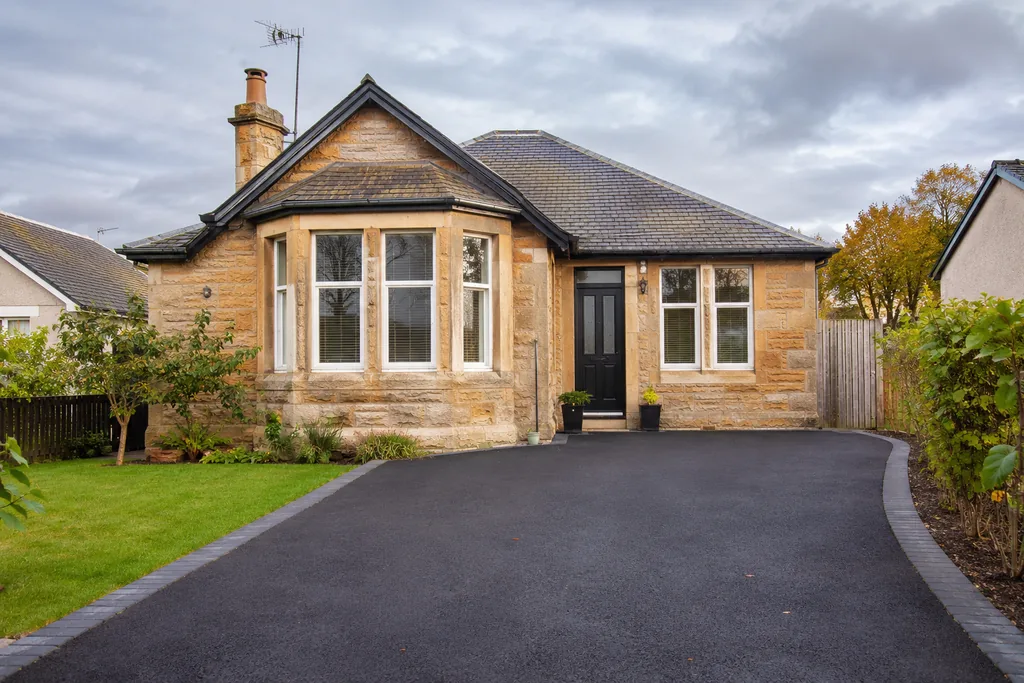
Why a drive needs an edge
Tarmac is strongest in the middle and weakest at the sides. A car wheel running near the edge presses on a surface with nothing beside it to hold it in. Over time the edge can crack, break away and crumble into the lawn.
A border fixes that. It is a firm line along the side of the drive. The tarmac is laid up against it, so the edge has something to rest on. It also gives you a clean, straight line where the tarmac meets the grass or the pavement.
Think of it as the frame round a picture. The tarmac is the picture, and a good frame makes it look finished. A bare edge of tarmac against soil or turf looks unfinished, and it tends to get ragged as the grass creeps in and the edge wears.
A border will not fix a weak base or bad drainage. It helps the edge, and that is all. But for a few extra materials and a bit of time, it is one of the best-looking and most useful parts of a drive.
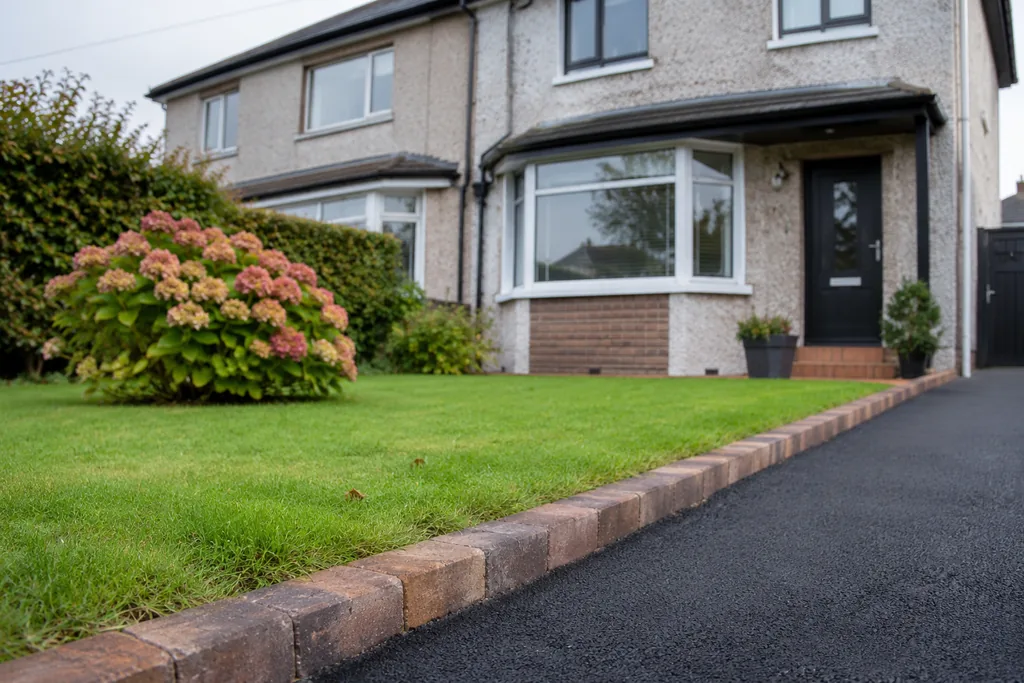
Block border
A block border is made of small paving blocks laid in a row along the edge of the drive. It is the choice you will see most often on a black tarmac drive in Scotland. Here, people call the blocks monoblock. It is the same product as block paving.
Blocks come in several colours, and they are laid before the tarmac goes down. That order matters. The blocks are bedded on a firm footing, and the tarmac is then spread and rolled right up against them.
Because blocks are small and sit side by side, they can follow a curve. If your drive bends round a flower bed or a tree, a block border can bend with it. That makes it a good fit for drives that are not a simple rectangle.
Blocks are also easy to replace. If one gets cracked or stained, a single block can be lifted out and a new one set in its place. You cannot do that with a long poured kerb. That saves you re-doing a whole edge for one damaged block.
Concrete kerb
A concrete kerb is a long, plain, straight edge. It looks like the kerb on a road. It is strong and does the job of holding the tarmac in place, but it does not have the paving look of a block border.
A kerb suits a drive that is mostly straight and a house with a simple, modern front. It is also a sensible choice on a side of the drive that nobody sees, such as the edge along a fence. Curves are harder, because a kerb is made in straight lengths.
Setts
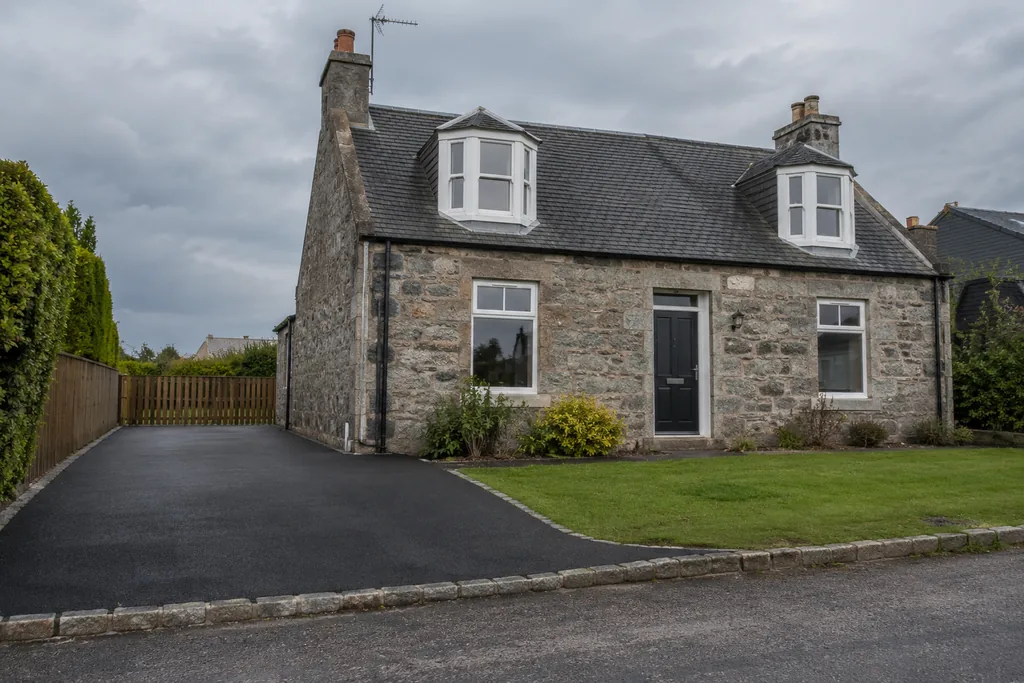
Setts are small blocks in the style of old street stones. A setts edge gives a drive a traditional look, and it often suits older houses and cottages better than a modern block.
A setts border is usually a narrow row, a line or two wide, along the edge of the black tarmac. The contrast between black and stone is gentle, and it looks at home beside sandstone or a stone wall.
Choosing a colour
Three colours come up most. Charcoal is a dark grey. Brindle is a warm mix of brown, red and grey. Natural is a lighter, stone colour.
Look at the walls of your house first.
- Stone or sandstone. Natural and brindle tend to look settled beside it. Charcoal gives sharper contrast.
- Render. Charcoal looks crisp against light render. Brindle looks softer.
- Brick. Brindle picks up the warm tones in the brick.
Then look at the roof and the front door. If you already have a colour in the door or the gate, a border that sits with it often looks right. Think about the plants and the path too. A bright border beside a bed of strong colours can look busy, while a quiet border lets the planting stand out.
Do not match everything exactly. A border that is close but not identical usually looks better than one that tries too hard.
See how these combinations look on our tarmac driveway styles page.
Gullies, gates and steps
Most drives are not a clear run of edge. There are drains, gate posts and steps, and the border has to deal with each of them.
A gully is the drain set into a drive. The border should stop short of it, or curve around it, so water can still get in. A drainage channel across the entrance needs the border to stop at its ends. At a gate post, the border meets the post and finishes neatly. At a step, the border may turn or drop.
These small details are where a neat job shows. A border that has been cut roughly around a drain looks poor and can block the water. Ask how your border will meet each of these.
What to ask in a quote
When you ask for a border, make sure the quote says:
- Which border you are getting: block, kerb or setts
- The colour, and a sample or a picture you can see
- How long the border runs, in metres
- How it will be fitted around gullies, gates and steps
- Whether the border goes in before the tarmac
Our tarmac driveway edging page explains how we fit borders, and you can ask us about your own drive when you call.
Questions
Do I need a border on a tarmac drive?
Not always, but a border supports the edge and tidies the line.
Is monoblock the same as block paving?
Yes. It is the same product. Scots usually say monoblock.
Can a border be added to an old drive?
Often when the drive is being resurfaced. See tarmac driveway resurfacing.
Which colour looks best?
The one that suits your house. There is no single right answer.
Do borders stop puddles?
No. A fall and a drain do that. Read why puddles form on a tarmac driveway.