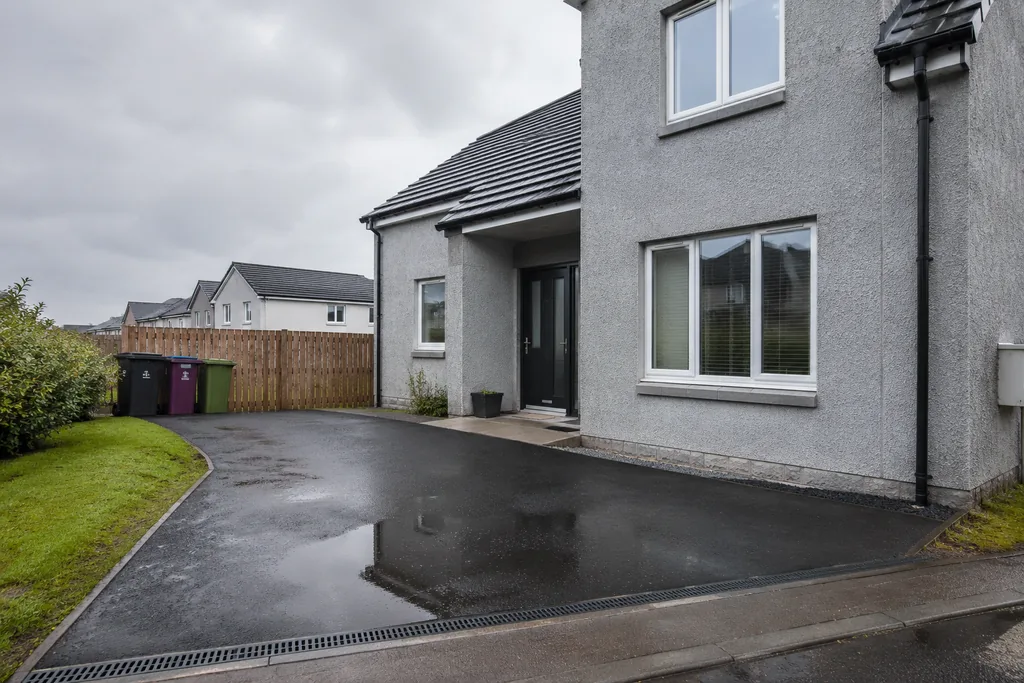
Why puddles form
Tarmac is a sealed surface. Rain does not soak through it, so it runs across the top until it finds a way off or a low spot to sit in. A puddle is water that has nowhere to go.
There are four usual reasons.
- A low spot. The surface dips, so water runs in and stays.
- No fall. A fall is a slight slope. If the drive is dead flat, the water has no direction to move in.
- A sinking base. The ground or stone under the tarmac has settled, and the surface has followed it down.
- A blocked drain. A gully or channel is full of leaves or silt, so the water cannot leave.
Weather makes it worse. After a few dry days a shallow dip may look fine, then fill every time it rains. Look at the drive an hour after rain, not the next morning, because that is when the pattern shows.
The first step is to work out which one you have. The fix is different for each.
A fall that sends water away
Water follows the slope, so the slope has to point the right way. On a drive, the fall should run away from your house and, where possible, away from the pavement too.
It does not have to be steep. A gentle, even fall is enough, and it is built into the base before any tarmac is laid. It is much harder to add one afterwards.
Where the fall points depends on your plot. On some drives it runs to a lawn or planted bed. On others it runs to a drain. The right answer depends on where the water can safely go.
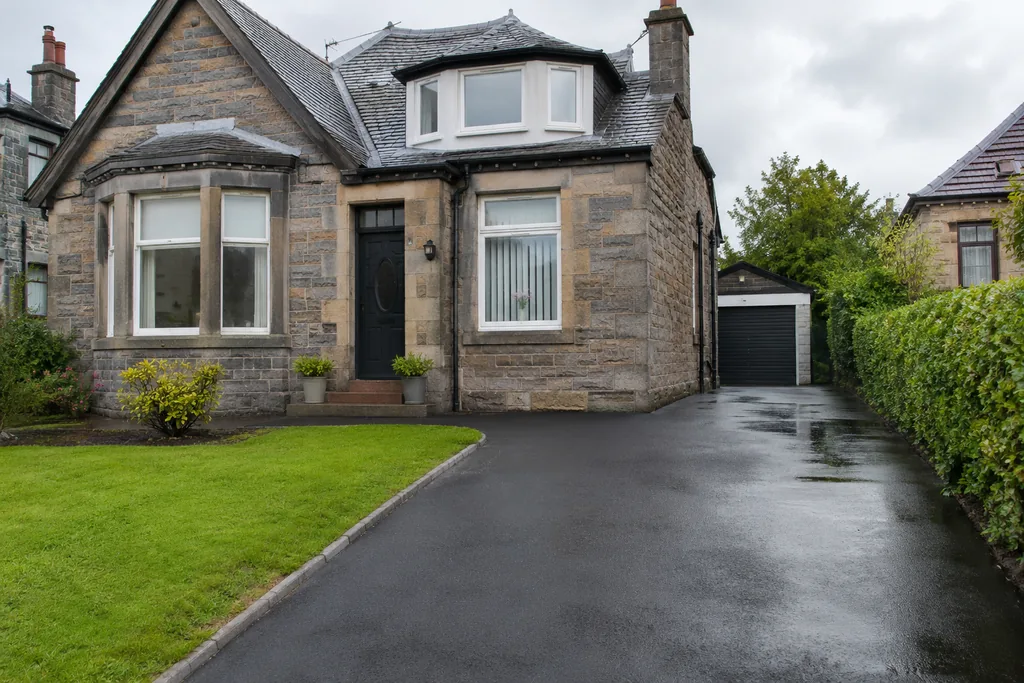
Channels and gullies
A drainage channel is a narrow, grated drain set across the drive, often at the entrance. It catches the water running down the drive before it reaches the pavement.
A gully is a drain set into the drive at a low point. Water runs to it and goes down.
Both are only as good as the ground they drain into. A channel that empties onto a flat, soft patch just moves the puddle along. The outlet has to lead somewhere, which is why drainage is planned for the whole drive and not added at the end.
Both need to be kept clear. Leaves, grit and moss build up on the grating. Clear them now and then, and especially before heavy rain.
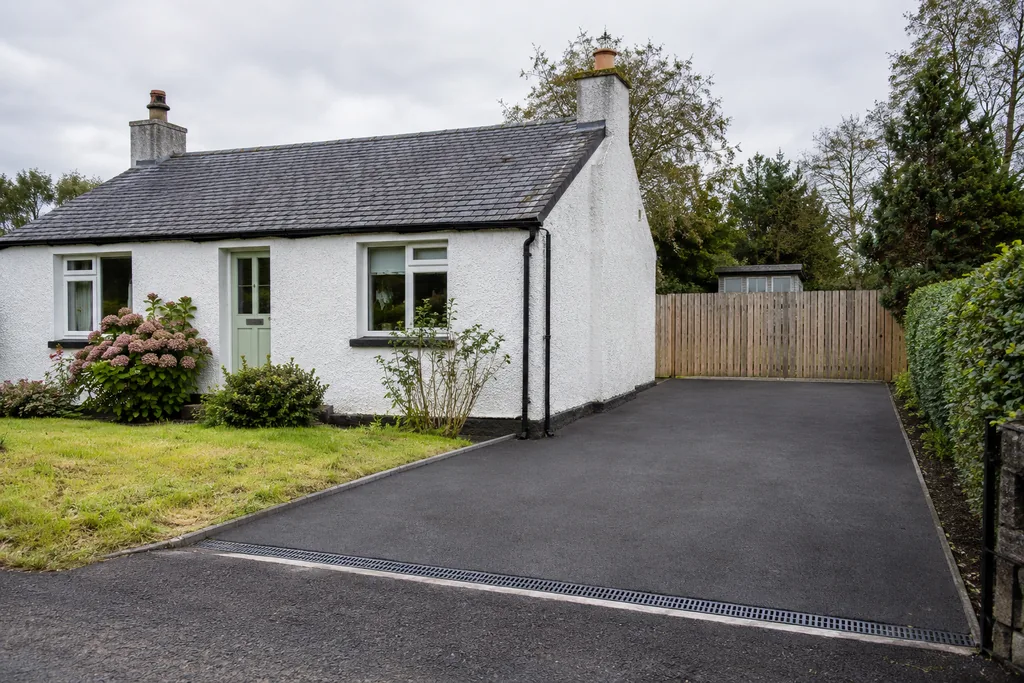
The base underneath
The base, or sub-base, is the layer of crushed stone under the tarmac. It carries the weight of the car. It also holds the shape of the drive.
If the stone is pressed down hard with a plate compactor, which is a heavy vibrating machine, it stays put. If it is thin, loose or laid on soft ground, it settles over time. The tarmac follows, and a dip forms that holds water.
This is why a good new drive starts with digging out. Soft soil and old surface come out, stone goes in, and it is pressed down in layers. You can read how we do it on our tarmac driveway installation page.
Where the water goes
The water has to go somewhere. The choices are a lawn or planted bed in your own garden, a soakaway, or a drain.
A soakaway is a pit filled with stone that lets water drain into the ground slowly. Whether you can use one depends on your ground.
The Scottish Government's householder guidance (Planning Circular 1/2024, Class 3C, read 23 November 2026) says a hard surface between your house and the road must either be porous or send its water to a porous area inside your garden. Check with your council about your own plot. Scottish Government guidance
Connecting to a road drain is a different matter. That is the council's decision. Glasgow City Council's footway crossing page (read 23 November 2026) covers the pavement edge but says nothing about drains, so ask the council that looks after your street. Glasgow City Council footway crossing page
Can an old drive be fixed?
Often, yes. It depends on the cause.
- A small dip on a firm drive. The low spot can be cut out and patched. See tarmac driveway repairs.
- Wide wear on a firm base. A new surface can be laid, with the levels corrected. See tarmac driveway resurfacing.
- A sinking base. The drive has to come up and be rebuilt.
Whatever you choose, deal with the water as well. A repaired dip with no fall and a blocked gully will fill again.
Do not rely on a thin top layer to hide a dip. The dip comes through again.
What to ask in a quote
If you want a new drive that stays dry, ask:
- Which way will the fall run, and where will the water go?
- Will there be a channel at the entrance?
- How will the base be built, and how will it be compacted?
- Does the border leave room for the gullies?
- Is any council permission needed for the drainage?
Our tarmac driveway installation page shows how we plan the base, the fall and the channel, and the cost factors are on our tarmac driveway costs page.
Questions
Is a puddle on a new drive normal?
A little dampness is normal. Standing water can mean a low spot.
Can I fix a dip myself?
Not properly. See tarmac driveway repairs.
Does a border stop puddles?
No. See how to choose a border.
Where can the water go?
Garden, soakaway or drain. The council decides about road drains.
Do I need permission to drain onto the road?
Check with the council. We cannot say yes or no.